
Choosing the right feeder means balancing weather resistance, easy cleaning, seed access, and price. Outdoor plastic bird feeders come in tube, hopper, and window-mounted designs, each suited to different spaces and bird habits. For 2026, a useful comparison should focus less on decorative features and more on how a feeder performs through everyday use.
Look for sturdy, UV-resistant plastic, secure hanging points, and drainage holes that help keep seed dry after rain. Check that ports and perches feel smooth, with no sharp edges or loose parts. A wide opening can make refilling easier, while removable components simplify cleaning. Small details matter. A lid that slips in strong wind or a narrow base that traps wet seed can turn an attractive feeder into a chore.
Match capacity to how often you can refill it and how many birds visit. A compact tube feeder may suit a balcony; a larger hopper can serve a busy yard but may need a sturdier pole. Plastic is often lighter than metal or wood, though prolonged sun exposure can make some products fade or become brittle. That trade-off is easy to underestimate. No single model fits every garden, and even well-designed feeders need regular inspection and cleaning. This guide compares practical features, common limitations, and value so readers can choose a feeder that suits their space, local conditions, and feeding routine.
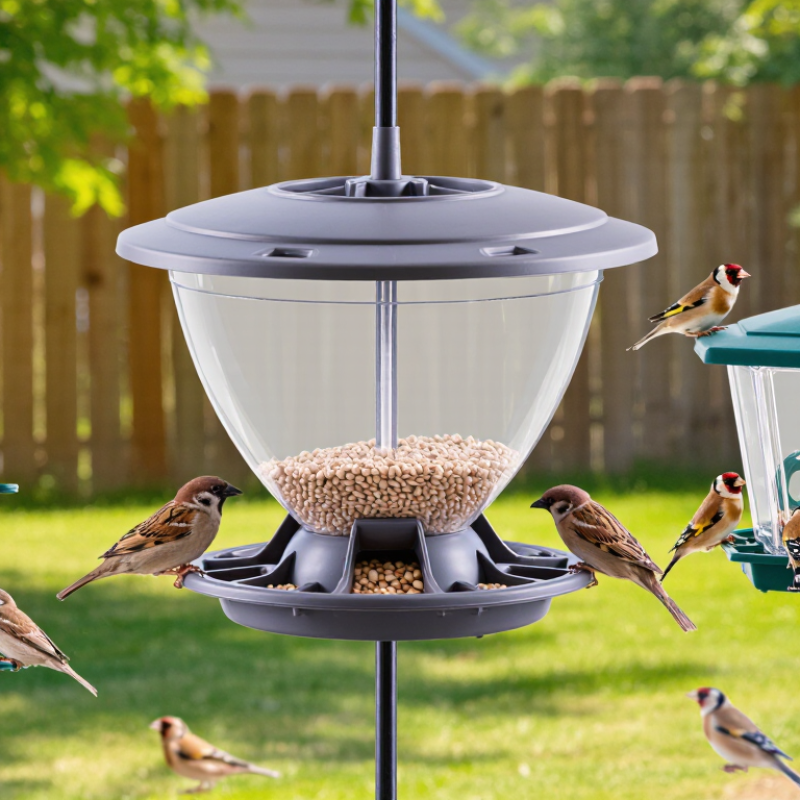
A plastic bird feeder works through gravity. Seed stored in a clear hopper moves downward as birds eat from openings near the base. A tray catches loose seed, while a roof helps shield food from rain. Drainage holes matter, too: damp seed can clump and spoil. Clear walls make the seed level easy to check, though sunlight may gradually make some plastics brittle.
Small design choices shape daily use. Narrow ports can limit seed scatter, but they may not suit larger birds. A stable hanging point reduces swinging in wind; placement near a window still needs care to reduce collision risks. The U.S. Fish and Wildlife Service’s 2022 National Survey counted 95.8 million wildlife watchers in the United States, underscoring how common backyard wildlife observation is. A feeder is only one part of that experience.
Hygiene is essential. Cornell Lab’s Project FeederWatch advises cleaning feeders about every two weeks, and more often in wet conditions. Remove old seed, scrub corners, rinse well, and let the feeder dry before refilling. It is easy to miss damp seed beneath a tray. Check it closely. A plastic feeder can be practical, but its performance depends on clean ports, dry seed, and regular inspection—not appearance alone.
For 2026, compare plastic bird feeders by weather resistance, cleaning access, and seed protection—not appearance alone. UV-stabilized plastic can better withstand sun exposure, while thick, smoothly finished walls are less likely to crack or trap grime. Check that the roof sheds rain and the base has clear drainage holes. A damp pile of seed can spoil quickly. A secure lid helps keep out squirrels and larger birds, but it should still open easily for refilling. Small details matter.
The U.S. Fish and Wildlife Service’s 2022 National Survey estimated that 96.3 million Americans watched wildlife. That’s a lot of backyards. Cornell Lab of Ornithology’s Project FeederWatch recommends cleaning feeders at least every two weeks, more often in wet weather. Look for removable trays and parts that separate without tools; narrow seams can be surprisingly hard to scrub. A larger hopper means fewer refills, but old seed may sit longer. No feeder stays spotless. Compare replacement-part availability and warranty terms, too, since outdoor plastic can fade or become brittle with age. Even a good design needs occasional checking.
| Feeder type | Typical design | Suitable food | Birds commonly attracted | Weather and durability considerations | Cleaning and maintenance | Best suited to |
|---|---|---|---|---|---|---|
| Tube feeder | Clear plastic seed tube with multiple feeding ports; often hangs from a hook or branch. | Sunflower kernels, nyjer, or other small seeds, depending on port size. | Finches, chickadees, and other small perching birds. | A clear tube makes seed levels easy to check. Look for a rain-resistant lid and drainage openings; prolonged sun exposure can age some plastics. | Narrow tubes can be harder to brush clean. Choose a design that opens fully and can dry completely. | Small birds and compact spaces. |
| Hopper feeder | A covered seed reservoir releases food onto a tray or feeding platform as birds eat. | Mixed seed, sunflower seed, or similar dry seed blends. | A range of perching birds, including cardinals, finches, and sparrows. | A roof helps shield seed from rain, but wind-driven rain can still enter. A sturdy hanging point or mounting bracket helps limit movement. | A wide-opening reservoir and removable tray make emptying and scrubbing easier. | General-purpose feeding and offering more than one type of seed. |
| Platform feeder | An open, flat tray, sometimes with a low rim and drainage holes. | Sunflower seed, cracked corn, millet, or small portions of other suitable bird foods. | Ground-feeding and larger-bodied birds, as well as many common perching birds. | The open tray offers little protection from rain, so drainage is important. Remove wet or spoiled food promptly. | Easy to inspect and scrub; clean frequently because exposed food can collect droppings and debris. | A broad mix of bird sizes and easy access for routine cleaning. |
| Suet feeder | A plastic-coated or plastic-framed cage that holds a suet cake; some designs have a tail prop. | Suet cakes formulated for wild birds. | Woodpeckers, nuthatches, chickadees, and other birds that cling to feeders. | Heat can soften or spoil suet. Use a shaded location in warm weather and follow the food label’s storage guidance. | A hinged or removable cage simplifies replacing the cake and cleaning away residue. | Offering high-energy suet in a dedicated feeder. |
| Window feeder | A compact tray or seed holder attached to a window with suction cups. | Small quantities of seed suited to the feeder’s openings and tray. | Small birds that are comfortable feeding close to a window. | Suction cups need a clean, smooth surface and periodic checks. Placement should also account for window-collision risk. | Small capacity means food may need frequent replenishing; removable trays are easiest to wash. | Close-up viewing where a secure, suitable window location is available. |
Comparison note: These are general feeder categories, not specific product ratings. Actual capacity, plastic type, UV resistance, drainage, and cleaning access vary by design. Choose a feeder that can be taken apart and cleaned, keep food dry and fresh, and clean it regularly.
Tube feeders suit finches, chickadees, and other small songbirds. Narrow feeding ports help limit access by larger birds, while several perches can serve a small flock. Choose a clear, UV-resistant plastic tube so you can spot damp seed or buildup. Keep it out of harsh afternoon sun when possible. Plastic can become brittle over time.
Hopper feeders work well for cardinals and sparrows that prefer a stable perch and room to feed. Their covered seed compartments help shield food from light rain, though water can still collect around seams. Check the corners after a storm. A sloped roof and drainage holes are useful details, not decoration. Larger birds may empty a small hopper surprisingly fast.
Platform feeders welcome ground-feeding birds such as doves and juncos, and they make seed easy to see. The open design also exposes food to rain and droppings, so frequent cleaning matters. A shallow tray with drainage holes is easier to maintain than a deep, closed basin. The trade-off is real. Whatever style you choose, wash it regularly with hot soapy water, rinse well, and let it dry fully before refilling. Inspect plastic for cracks; rough edges can trap residue and are harder to clean.
Outdoor plastic bird feeders for 2026 should handle more than a sunny afternoon. Look for UV-resistant plastic, a close-fitting lid, and drainage holes that let rainwater escape. In strong wind, a wide base or secure hanging point helps limit swinging and spills. Small details matter. Clear panels make seed levels easy to check, but they can become cloudy after prolonged sun exposure. Plastic also varies in quality, so inspect hinges and feeding ports for thin, brittle areas before buying.
Cleaning is essential, not optional. Choose a feeder that opens without tools and has smooth corners where damp seed cannot collect. Empty old seed, wash the parts with mild soap, rinse thoroughly, and let them dry fully before refilling. A brush helps reach narrow ports. I would not assume a feeder is clean just because it looks clear; residue can hide under trays. For pest control, use a fitted lid, avoid overfilling, and sweep spilled seed from beneath the feeder. A catch tray may reduce waste, though it can also collect wet debris and needs frequent cleaning. No design removes every pest. Placement and regular checks still matter.
Choosing the best outdoor plastic bird feeder starts with the birds and weather in your yard. A compact tube feeder suits small seeds and finches, while a broad tray welcomes larger visitors but may need more frequent cleaning. Check that the plastic is UV-resistant and sturdy enough for wind, cold snaps, and daily use. Clear panels make seed levels easy to see. Handy, though they can show scratches over time.
Look for drainage holes, smooth edges, and parts that come apart without a struggle. Damp seed can spoil quickly, so a feeder that is easy to wash is more useful than one with extra decorations. Small details matter. A secure lid helps keep rain out, and well-spaced perches can reduce crowding around feeding ports. No feeder is completely mess-free; dropped hulls are part of the routine.
Match the feeder’s capacity to how often you can refill it. A large hopper may seem convenient, but seed can sit too long in a quiet yard. Place it where birds have nearby cover, while keeping it visible enough for you to check regularly. If you have noticed squirrels or strong gusts, choose a design with a stable hanging point and a narrow opening. I would still watch how it performs for a week or two; the perfect setup on paper may not suit the birds that actually visit.
Seed falls from a hopper through openings near the base. A tray catches loose pieces, and a roof helps block rain.
A tube feeder with narrow ports often suits finches and chickadees. Several perches can give a small flock room.
A hopper feeder offers a stable perch and covered seed space. Check its corners after storms; water can collect there.
They make seed visible and welcome ground-feeding birds. Rain and droppings reach the food easily. Clean them often.
Clean it about every two weeks, or more often in wet weather. Remove old seed, scrub, rinse, and dry it fully.
Look for a secure lid, drainage holes, and a sloped roof. Smooth edges also make cleaning easier. Small details matter.
Match its capacity to how often you refill it. In a quiet yard, seed may sit too long in a large hopper.
Choose a visible spot near some cover, with a steady hanging point. Keep window risks in mind, and watch the setup for a week or two.
Check for cracks, rough edges, damp seed, and blocked ports. Sunlight may weaken plastic over time. I still miss hidden corners sometimes.
Outdoor plastic bird feeders offer a practical way to attract birds while making feeding simple and accessible. In 2026, compare capacity, feeding-port design, visibility, mounting options, and ease of refilling to find a feeder suited to your space. Different styles can serve different birds, from compact feeders for smaller visitors to larger designs with more room for multiple birds. Consider how the feeder’s shape and openings affect access, comfort, and seed flow.
Weather resistance and straightforward cleaning are essential for dependable outdoor use. Choose sturdy plastic that can withstand sun and rain, and look for parts that are easy to open and wash. A secure lid and thoughtful placement can help keep seed dry and reduce unwanted visits from pests. The best Outdoor plastic bird feeders for your yard will balance durability, bird-friendly design, maintenance needs, and available space, while matching the types of birds you hope to welcome.