
China Best Rubber Dog Fetch Discs Wholesale introduces a practical buying guide for retailers, distributors, and professional pet suppliers. Rubber dog fetch discs are more than colorful play items. They must balance flexibility, strength, visibility, and comfortable handling. A disc should fly steadily, float when needed, and remain gentle on a dog’s mouth.
Dr. Roger Mugford, a respected canine behavior specialist, has said, “Play is the key to a happy dog.” This principle matters when selecting wholesale products. A well-designed disc encourages movement, attention, and positive interaction between dogs and their handlers. However, the best product is not always the heaviest or most durable. A stiff edge may survive rough use, yet it can feel unpleasant during repeated catching. Softer rubber can improve comfort, but it may show teeth marks sooner.
Details matter. Buyers should examine rubber consistency, edge finishing, odor, color stability, and manufacturing control. A bright orange disc is easier to spot across wet grass. A textured surface can provide better grip after swimming. Product dimensions should also suit different breeds, from small terriers to large retrievers.
No product is perfect.
That is worth admitting. Even carefully tested Rubber dog fetch discs require regular inspection. Cracks, deep bite marks, or loose fragments mean replacement is sensible. Reliable wholesalers should provide clear specifications, stable batch quality, packaging details, and responsive communication. Price remains important, but it should not replace practical testing. A sample order may reveal weaknesses that photographs hide.
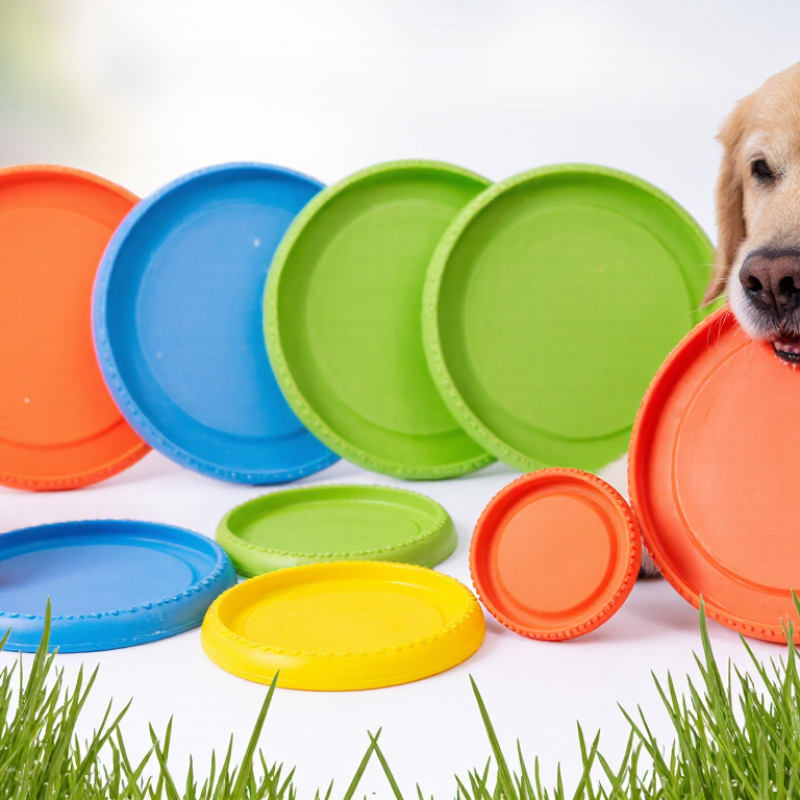
Rubber fetch discs are flexible outdoor toys designed for repeated throwing and retrieval. Their performance depends on material, shape, and manufacturing control. Natural rubber offers a soft, elastic feel, while synthetic rubber can provide stronger resistance to moisture and abrasion. A balanced compound should bend without cracking or becoming sticky. Odor matters too. Strong chemical smells may indicate poor material control.
Common sizes range from 12 to 18 centimeters in diameter. Smaller discs suit puppies and compact dogs, while larger discs are easier for strong breeds to grip. Thickness also changes the experience. Thin discs fly farther, but thicker edges usually tolerate harder chewing. A smooth rim helps protect gums. However, no size fits every dog, and real testing is still necessary.
For wholesale buyers, fetch discs can serve pet retailers, training centers, shelters, and outdoor activity suppliers. Buyers should request material details, size tolerances, color samples, and packaging specifications. Factory checks should include rebound testing, edge inspection, surface cleanliness, and repeated bending. Batch consistency is important. Small differences can affect flight and grip. China-based production may support flexible quantities and custom packaging, but low pricing should not replace quality verification. I would also review performance after extended use, because a disc that looks durable on day one may soften or split later.
China Best Rubber Dog Fetch Discs Wholesale
Material selection shapes the feel, durability, and production consistency of a dog fetch disc. Natural rubber offers lively rebound and strong elasticity. It feels springy when a dog bites the rim. However, natural rubber can show odor, color, and hardness variation between batches. Suppliers should check tensile strength, tear resistance, and surface defects before shipment.
TPR provides a practical alternative for wholesale production. It usually supports stable molding, bright colors, and controlled flexibility. Its performance depends heavily on the formulation, not the name alone. A 20–40 Shore A disc feels soft and compressible. It may suit gentle indoor play, but sharp teeth can damage it faster. That matters. Around 50–65 Shore A, the disc balances grip, bounce, and resistance. This range often works well for regular outdoor fetching. Harder materials, near 70–80 Shore A, resist deformation and abrasion better. They can feel less comfortable for dogs that prefer a softer bite.
Shore A readings are useful, but they are not the whole decision. Sample thickness, temperature, and testing pressure can change the result. I would test each disc after soaking, freezing, and repeated impact. A small edge tear can reveal more than a polished sample. We once considered hardness alone and overlooked rim flexibility. That was a useful mistake. Wholesale buyers should request material records, batch samples, odor checks, and measured dimensions. The safest choice is not always the softest disc. It is the material that matches the dog’s bite, play environment, and expected service life.
| Material / Hardness | Typical Shore A Range | Key Physical Characteristics | Flexibility and Bite Feel | Weather and Temperature Considerations | Typical Durability for Fetch Discs | Best Wholesale Use Case |
|---|---|---|---|---|---|---|
| Natural Rubber 20–40 Shore A |
Approximately 20–40 | High elasticity, good tensile strength, and strong resilience. It is commonly selected when a soft, flexible product is required. | Very soft and pliable | Good performance in moderate outdoor conditions. Prolonged exposure to ultraviolet light, ozone, oils, or high heat can accelerate aging. | Good for gentle to moderate chewing | Soft fetch discs for puppies, senior dogs, small dogs, and dogs that prefer a flexible toy. |
| Natural Rubber 40–60 Shore A |
Approximately 40–60 | Balances elasticity, tear resistance, and shape recovery better than softer natural rubber grades. | Flexible with moderate resistance | Suitable for regular outdoor play when stored away from direct sunlight and extreme temperatures. | Good to very good for routine fetch | General-purpose discs for mixed-size dogs and repeated indoor or outdoor use. |
| Natural Rubber 60–80 Shore A |
Approximately 60–80 | Higher hardness improves resistance to deformation and supports a more stable flying shape. | Firm with limited flexibility | Outdoor aging remains a consideration; resistance depends on the compound, protective additives, and processing quality. | Very good for active fetch | Firm discs for larger dogs and high-frequency throwing, provided the dog is not an aggressive chewer. |
| TPR 20–40 Shore A |
Approximately 20–40 | Thermoplastic rubber combines rubber-like flexibility with thermoplastic processing. It can be produced in soft, lightweight forms. | Soft and springy | Often offers more consistent processing than natural rubber. Actual resistance to sunlight, cold, and heat varies by TPR formulation. | Good for light to moderate use | Colorful, lightweight promotional or entry-level fetch discs requiring soft handling. |
| TPR 40–60 Shore A |
Approximately 40–60 | Provides a practical balance of flexibility, impact absorption, processability, and dimensional stability. | Moderately flexible and resilient | Generally suitable for outdoor play; low-temperature flexibility and UV stability should be verified with the specific formulation. | Good to very good for regular fetch | High-volume wholesale programs seeking consistent molding, multiple colors, and moderate product cost. |
| TPR 60–80 Shore A |
Approximately 60–80 | Firm structure supports dimensional stability and impact resistance while retaining some rubber-like recovery. | Firm with moderate resilience | Performance depends strongly on polymer type and additives. Product testing is recommended for cold-weather and long-term outdoor use. | Very good for repeated fetch | Firm, stable discs for active dogs, retail ranges, and orders requiring repeatable production dimensions. |
| Recommended Soft Range 20–35 Shore A |
Soft grade | Prioritizes compressibility and reduced impact during catching. The disc may deform more easily under strong chewing. | Very flexible | Check low-temperature flexibility and surface aging before approving outdoor production. | Moderate | Puppy training, gentle play, small breeds, and comfort-focused product lines. |
| Recommended Balanced Range 40–60 Shore A |
Medium grade | Offers a balanced combination of flexibility, rebound, tear resistance, and flying stability. | Moderately flexible | Usually the most versatile range, subject to compound-specific weather testing. | Good to very good | General wholesale programs serving multiple dog sizes and everyday fetch applications. |
| Recommended Firm Range 60–80 Shore A |
Firm grade | Improves resistance to compression and helps maintain shape during throwing, but may feel too hard for some dogs. | Firm and less flexible | Verify brittleness, impact behavior, and flexibility at the intended operating temperature. | Very good for fetch; not automatically chew-proof | Large-dog fetch products and applications where shape retention is more important than softness. |
Note: Shore A values are approximate material-selection ranges, not universal specifications. Final performance depends on formulation, fillers, pigments, molding conditions, thickness, seam design, and storage. Dog toys should be inspected regularly and replaced if damaged; no rubber or TPR toy should be described as indestructible.
China Best Rubber Dog Fetch Discs Wholesale
For wholesale rubber dog fetch discs, safety testing should begin with the material, not the packaging. ISO 37 measures tensile strength, elongation, and related rubber performance. It helps evaluate whether a disc may tear during repeated pulling. However, ISO 37 is a test method, not a complete safety certification. Test samples should represent the actual production formula and batch.
REACH review checks restricted substances and substances of very high concern in applicable markets. Suppliers should provide current declarations, laboratory reports, and traceable material records. FDA 21 CFR 177.2600 covers certain rubber articles intended for repeated food contact. It does not automatically approve every dog toy. Its relevance depends on the material, formulation, and intended use. This distinction is often missed. A compliant report can still be incomplete if the tested sample differs from mass production.
Tips: Ask for batch identification, test dates, sample descriptions, and laboratory accreditation. Inspect edges, odor, surface cracks, and rebound before shipment. Keep a retention sample. Small gaps in records deserve review. Safety claims should match the evidence, not exceed it. Safety testing is ongoing, especially when colors, fillers, or rubber compounds change.
China Best Rubber Dog Fetch Discs Wholesale
China Wholesale Metrics: MOQ, Sampling Time, QC, and Export Documentation
Wholesale buyers of rubber dog fetch discs need clear metrics before placing a container order. MOQ often starts at 500 to 1,000 pieces, depending on color, size, and packaging. Mixed colors may be possible. Confirm this in writing. A lower MOQ can raise the unit cost because molds, setup, and packing materials still require payment.
Sampling usually takes three to seven working days after artwork and specifications are approved. Allow extra time for custom colors or revised molds. Request at least two samples. Check the disc’s diameter, edge softness, rebound, surface finish, and rubber odor. A practical drop test on concrete can reveal cracking or excessive deformation. However, one sample cannot represent every production batch. That weakness deserves attention.
During mass production, suppliers should record dimensions, weight, color consistency, molding defects, and carton counts. Photos alone are not enough. An independent pre-shipment inspection is useful when order value is significant. For export, prepare a commercial invoice, packing list, purchase contract, transport document, and certificate of origin when required. Test reports and material declarations may also support customs review or buyer records. Check destination-country labeling and packaging rules before shipment. Documents are often treated as an afterthought. That can delay release.
Typical planning benchmarks for MOQ, sampling, quality control, and export documentation in China rubber pet-product wholesale orders.
The benchmark assumes a standard custom wholesale order: MOQ of 500 pieces, a 7-day pre-production sample cycle, a 2-day quality-control inspection, and five commonly used export documents including the commercial invoice, packing list, bill of lading, certificate of origin, and inspection record. Exact requirements may vary by product specification, destination market, and shipping method.
For wholesale buyers, disc dimensions should match the dog size and selling channel. Common diameters range from 12 to 25 centimeters, but custom measurements are available. A smaller disc suits puppies, while a larger one offers better visibility outdoors. Thickness requires closer attention. Options from 3 to 8 mm balance flexibility, bite resistance, and shipping weight. A 3 mm disc feels light and folds easily, yet strong chewers may damage it faster. An 8 mm version feels sturdier, although some dogs may find it less comfortable. We learned this through sample testing, not assumptions. One early sample looked durable but warped after repeated production heat.
Packaging should protect edges and keep units clean during warehouse handling. Bulk cartons can hold individually packed discs, stacked by color, size, or thickness. For retail shelves, sealed bags with clear measurements reduce buyer confusion. Each carton should state quantity, net weight, gross weight, and packing dimensions. Cost per unit depends on material blend, mold setup, order volume, packaging, and inspection requirements. A low quotation may exclude inner bags, color matching, or defect replacement. Ask for a complete landed-cost worksheet before approving production. Request samples from the actual mold. Compare diameter, thickness, rebound, odor, edge finish, and print accuracy. We still recheck costs after packaging changes, because small additions can alter margins.
Natural rubber feels springy and offers lively rebound. It can feel exciting. However, odor, color, and hardness may vary between batches. TPR usually supports stable molding and bright colors. Its flexibility depends on the formulation, not the material name alone.
A 20–40 Shore A disc feels soft and compressible. It may suit gentle indoor play. Sharp teeth can damage it faster. Around 50–65 Shore A balances grip, bounce, and resistance. A 70–80 Shore A disc resists abrasion better, but it may feel uncomfortable for dogs preferring soft bites.
No. Thickness, temperature, and testing pressure can change the reading. Test samples after soaking, freezing, and repeated impact. Check the rim carefully. A small edge tear may reveal more than a polished sample. We once trusted hardness alone and missed rim flexibility.
Request batch identification, test dates, sample descriptions, and laboratory details. ISO 37 can assess tensile strength and elongation. It does not provide complete product safety approval. Review restricted-substance declarations for applicable markets. Keep a retention sample from actual production.
Not automatically. The tested sample must match the production formula and batch. Changes in color, fillers, or rubber compounds require renewed review. Inspect odor, surface cracks, edges, and rebound. Safety claims should match the evidence. Records with gaps deserve questions.
Common diameters range from 12 to 25 centimeters. Smaller discs may suit puppies. Larger discs are easier to see outdoors. Thicknesses from 3 to 8 millimeters offer different trade-offs. A 3-millimeter disc folds easily, while an 8-millimeter disc feels sturdier.
Packaging should protect edges and keep discs clean. Bulk cartons can separate units by color, size, or thickness. Retail bags should show clear measurements. Cartons should list quantity, net weight, gross weight, and packing dimensions. Small packaging changes can affect storage space and margins.
Material blend, mold setup, order quantity, packaging, and inspection requirements all affect cost. A low quote may exclude inner bags or defect replacement. Ask for a complete landed-cost worksheet. Request samples from the actual mold. Compare size, thickness, rebound, odor, edges, and print accuracy.
Rubber dog fetch discs are durable, flexible toys designed for interactive play, training, and wholesale pet-product programs. Their performance depends on material selection, size, and hardness. Natural rubber offers elasticity and resilience, while TPR can provide a softer feel and consistent molding performance. Hardness levels from 20 to 80 Shore A allow buyers to choose between gentle flexibility and greater resistance to chewing. Common specifications include different diameters and thicknesses between 3 and 8 mm, depending on the intended dog size and use.
For wholesale purchasing, buyers should evaluate safety documentation, including relevant ISO 37 tensile testing, REACH compliance, and FDA 21 CFR 177.2600 requirements where applicable. Important commercial factors include MOQ, sample development time, production quality control, packaging format, and export documents. A clear specification sheet covering dimensions, material, color, weight, labeling, and target cost per unit helps suppliers provide accurate quotations and maintain consistent production.