
Choosing Plastic hamster cages and homes is not just a matter of color or price. The enclosure shapes a hamster’s daily life: where it burrows, how it explores, and whether it can retreat from noise. A wheel that turns smoothly, deep bedding for tunneling, and a secure, well-ventilated top are practical details worth checking. Small details matter.
Plastic habitats can be lightweight and easy to clean, but design varies widely. Look closely at floor space, ventilation openings, door security, and whether the layout allows useful enrichment. A bright display model may look spacious while offering little uninterrupted floor area. That deserves a second look.
This guide will compare the features that affect comfort and daily care, including cleaning access, durability, and room for bedding and accessories. It will also consider common compromises, because no single cage suits every home or hamster. Measure the available space before buying, and assess the habitat from the animal’s perspective, not just the shelf.
A named expert’s exact quotation cannot be responsibly supplied without a verifiable source. Rather than inventing one, this introduction keeps the guidance unattributed. The aim is simple: choose a secure, usable home, then keep checking whether it meets your hamster’s needs.
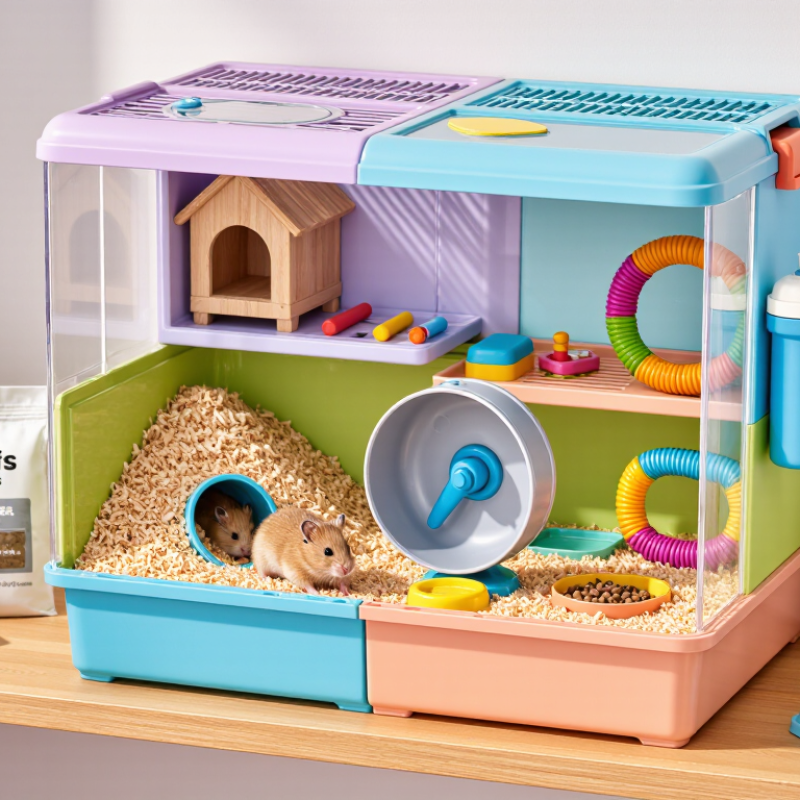
A plastic hamster home needs more than a secure lid and a bright viewing window. Check usable floor area first: the RSPCA recommends at least 100 by 50 centimetres for a hamster’s enclosure. A wide, unbroken base gives room to run, forage, and place separate sleeping and toilet areas. In a 2007 study in Animal Welfare, Fischer and colleagues compared golden hamsters housed in different-sized cages. Larger enclosures supported more natural activity, including digging, and reduced repetitive behavior. More room matters. Plastic walls can make cleaning simple, but ventilation must remain generous and unobstructed.
Enrichment should let a hamster behave like a hamster, not just decorate a cage. Provide deep, compactable bedding for burrowing, a solid-surface wheel sized to keep the back straight, and safe chew items. Scatter a portion of dry food through the bedding so the animal can search for it. Add hides with more than one exit; a single doorway can feel like a trap. Depth matters, too. Plastic cages with shallow trays may look spacious but still prevent proper digging. The Blue Cross also advises deep bedding and suitable enrichment in hamster housing guidance. Observe what your hamster actually uses, then adjust the layout. I still find it easy to underestimate how quickly a neat setup can become boring.
Compare usable floor areas: each value is calculated from the example enclosure’s length × width. These examples are for comparison, not universal minimum-size recommendations.
Choose the largest practical enclosure with one continuous floor area, then provide deep bedding, a suitable wheel, hides, and opportunities to forage and explore. Check current animal-welfare guidance for your hamster’s species and location.
When choosing plastic hamster cages and homes, compare usable floor space before height. Blue Cross’s hamster-care guidance recommends at least 100 × 50 cm of unbroken floor area. A tall cage with narrow platforms may look spacious but offer less room for running and burrowing. Measure the actual base, not the outside shell. More space helps fit a deep-bedding zone, a solid exercise wheel, and separate food and water areas without crowding.
Layout matters. Look for a broad, continuous base and corners that are easy to reach during cleaning. A large front door can make bedding changes and gentle handling less awkward; small roof hatches may limit access. Check that the wheel turns freely and that tubes do not create tight bottlenecks. I would choose a roomy, simple layout over a maze of plastic levels, though awkward corners can be easy to overlook. Platforms add variety, but they do not replace floor space.
Tips: Before buying, sketch the wheel and hideout footprints on paper. Then check whether your hand can reach the far corners. Small detail. Also inspect ventilation openings and latches, and make sure the cage stays stable when opened. A plastic home is easier to wipe clean, but scratches and seams still need regular checks.
Plastic quality matters because hamsters gnaw, climb, and press their noses against cage walls. Choose thick, smooth plastic without sharp seams, brittle corners, or a strong chemical odor. Check joints and doors for gaps a hamster could widen. Scratches and cloudy patches are not automatic hazards, but deep cracks can trap dirt and weaken the enclosure. It is easy to underestimate tiny vents.
Airflow is essential. The National Research Council’s Guide for the Care and Use of Laboratory Animals (2011) gives 10–15 air changes per hour as a general recommendation for animal rooms. That figure is not a household-cage standard, but it underlines why a mostly sealed plastic box can become stale and humid. Look for openings on multiple sides, and keep bedding clear of them. Wipe condensation promptly; persistent dampness deserves attention.
Safety also depends on usable space and structure. The RSPCA’s hamster-care guidance recommends at least 100 × 50 cm of floor area. Measure the inside, not the advertised outer dimensions. Check that platforms feel stable and that ventilation slots cannot trap toes. A bright, clear cage may look convenient, yet sunlight can heat it quickly. Place it away from direct sun and drafts, then inspect the plastic regularly for fresh chew marks.
A plastic hamster home should make routine cleaning manageable without sacrificing space or airflow. Look for broad access panels, smooth corners, and a solid floor that holds bedding. Small doors can turn a simple spot-clean into a frustrating reach. Check that the enclosure has plenty of ventilation openings, especially if it includes enclosed sections.
Assembly matters after the first day, too. Fit each panel firmly and test every latch with a gentle pull. Loose connectors may shift when bedding is moved. Check seams for gaps and edges for rough plastic. If the design uses tubes, make sure they are easy to remove and clean, and never treat them as a substitute for open, well-ventilated living space. A quick assembly can still be awkward.
Think about the daily routine. Can you lift out a soiled corner of bedding without dismantling the whole home? Can food dishes and a water bottle be reached easily? These small details save time. Spot-clean regularly, then wash surfaces with mild, unscented soap and rinse them well. Dry everything before adding fresh bedding. Keep some clean, familiar bedding when possible; a fully stripped enclosure may unsettle a hamster. Plastic can also be chewed, so inspect corners often and replace damaged pieces. A neat-looking cage is not always the easiest one to live with.
Match the cage to the hamster, not just the corner where it will fit. A Syrian hamster needs room to turn, forage, and use a wheel without squeezing past a water bottle. Blue Cross guidance recommends a floor area of at least 100 by 50 centimetres. Measure the usable floor, not the outside dimensions. Measure first.
Plastic homes can be light and easy to wipe, but solid walls may restrict airflow. Choose a design with broad mesh ventilation and secure, easy-to-check doors. Avoid placing it beside a sunny window, radiator, or noisy television. RSPCA guidance recommends deep bedding—around 20 centimetres—so hamsters can burrow. Check that the base is deep enough to hold it without bedding spilling through vents. Air matters.
Think about daily care, too. Can you reach the back corners, lift the lid safely, and replace bedding without blocking the room? A large cage that is awkward to clean may become harder to maintain; that trade-off deserves honest thought. The Blue Cross and RSPCA figures are useful starting points, not guarantees that every layout will suit every hamster. Add a solid exercise wheel, hideouts, and chew-safe enrichment, then watch how your pet uses the space. A quiet corner helps. A perfect setup on paper can still need adjusting.
Aim for at least 100 × 50 cm of usable floor area. Measure the inside, not the outer shell.
It gives room for running, foraging, and separate sleeping and toilet areas. More space can also support digging and reduce repetitive behavior.
Provide deep, compactable bedding, a solid-surface wheel, safe chew items, and hiding places with more than one exit. Scatter some dry food for foraging.
Yes. It may look roomy but leave too little depth for burrowing. Bedding depth is easy to underestimate.
Look for thick, smooth plastic without sharp seams, brittle corners, or strong odors. Check doors and joints for gaps.
Look for openings on multiple sides, and keep bedding clear of them. A mostly sealed box can become humid and stale.
Wipe condensation promptly and inspect cracks regularly. Deep cracks can collect dirt and weaken the enclosure.
Keep it away from direct sunlight and drafts. Sunlight can heat a clear enclosure quickly. That detail is easy to miss.
Watch which hides and enrichment items your hamster uses, then adjust them. A tidy setup can become boring faster than expected.
Choosing the right Plastic hamster cages and homes starts with understanding your hamster’s need for room to move, explore, rest, and enjoy enrichment. Compare the usable floor space, layout, and accessibility of each enclosure, making sure doors and openings allow easy interaction without creating escape risks. A thoughtful design should provide space for suitable bedding, hiding places, and activities while remaining practical for your home.
Before choosing, check that the plastic feels sturdy, the ventilation openings allow good airflow, and the enclosure has no obvious sharp edges or unsafe gaps. Consider how easily it can be cleaned, assembled, and moved, since everyday convenience matters as much as appearance. The best option is one that suits your hamster’s size and habits, supports a comfortable and engaging environment, and fits your available space and care routine.