
Interactive dog tug toys are moving from simple rope products into a serious category for global pet buyers. APPA’s 2023–2024 National Pet Owners Survey reported that 66% of U.S. households own a pet. Its spending data also showed continued growth in pet care and enrichment products. Grand View Research similarly identifies interactive play items as an expanding segment within the global pet toys market.
The demand is understandable. A strong tug toy can turn a small living room into a controlled training space. It supports movement, engagement, and human–dog bonding. Dr. Patricia McConnell, a respected applied animal behaviorist, emphasizes that “play is important to dogs.” That principle should guide product selection, not only colorful packaging. Good Interactive dog tug toys need comfortable handles, durable stitching, suitable dimensions, and materials that do not easily shed dangerous pieces.
Global buyers also face practical differences. A toy for a powerful German Shepherd may overwhelm a small terrier. Cotton rope can feel soft, while rubber provides a different grip and cleaning experience. Product claims still require caution. “Indestructible” is rarely realistic. Even premium toys can fail under determined chewing. Supervision remains essential, especially when threads loosen or seams separate.
This 2026 guide compares Interactive dog tug toys for distributors, retailers, trainers, and informed pet owners. It considers construction, engagement, safety-minded design, buyer value, and regional suitability. Some conclusions will remain imperfect, because dog preferences vary widely. A toy that excites one dog may be ignored within minutes. That uncertainty deserves honest attention.
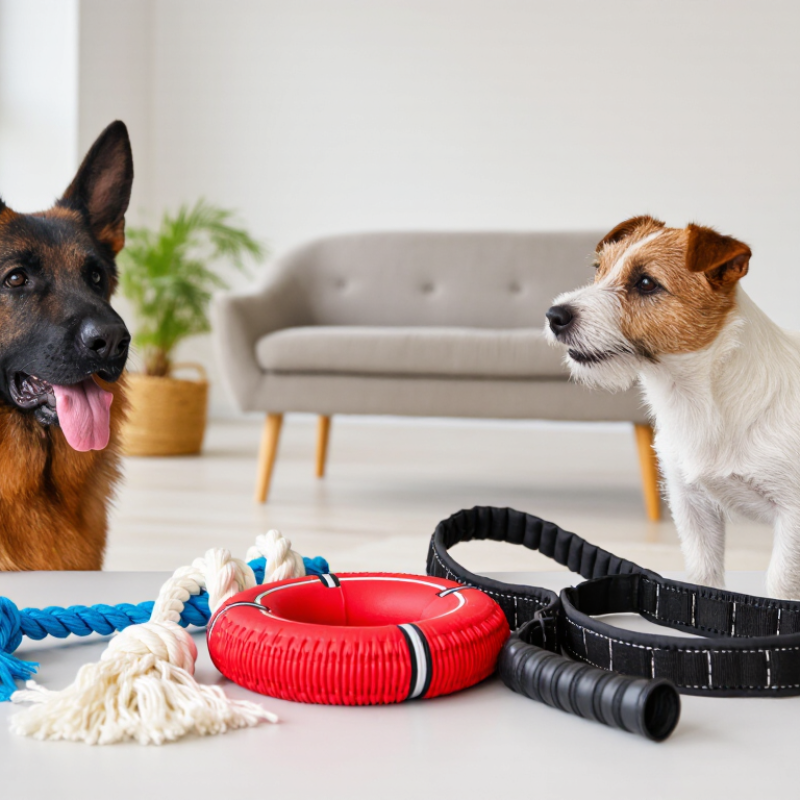
Global Dog Ownership Is Driving Demand for Interactive Tug Toys
The APPA 2023–2024 National Pet Owners Survey reports 65.1 million U.S. households owned a dog. That figure shows how deeply dogs fit into daily family life. FEDIAF’s 2024 European facts report places dogs in roughly one-quarter of European households. More households also seek toys that support exercise, engagement, and supervised bonding.
Tug toys make that interaction visible. A dog pulls, pauses, watches, and pulls again. Good designs should match the dog’s weight, bite strength, and play style. Veterinary guidance commonly recommends durable materials, clear supervision, and immediate removal after serious damage. A frayed rope can hide loose fibers. A detached piece can create a swallowing risk.
Global buyers should also examine handle comfort, washability, and temperature tolerance during shipping or outdoor use. A toy tested only in a living room may perform differently on wet grass or rough flooring. Product instructions should be easy to understand across markets. That detail is often underestimated.
Not every “interactive” toy creates meaningful engagement. Some dogs lose interest quickly. Others become overly excited and need calmer play. Independent testing, transparent material information, and realistic size guidance can improve buyer confidence. Yet no label replaces observation. Owners still need to inspect seams after every energetic session.
Category-based buyer guide for interactive tug toys, prepared for global purchasing and product comparison.
| Rank | Interactive tug format | Primary interaction | Best suited for | Useful product features | Global buyer considerations | Safety and care notes |
|---|---|---|---|---|---|---|
| 1 | Braided fleece tug rope | Two-person tug, pulling and short-distance fetch | Small to large dogs that prefer soft mouthfeel | Flexible braided construction, reinforced loop, washable fabric, visible stitching | Lightweight for retail and e-commerce shipping; suitable for indoor and outdoor play | Remove loose strands and replace when the braid becomes significantly frayed |
| 2 | Rubber ring tug | Resisted pulling, carrying and controlled chewing | Powerful chewers and active adult dogs | Flexible natural or synthetic rubber, rounded edges, high-visibility color, easy-rinse surface | Weather-resistant formats are practical for humid, rainy or outdoor markets | Select a size that cannot be swallowed; inspect for cracks, splits or missing pieces |
| 3 | Ball-on-rope tug toy | Tug, fetch and chase | Dogs motivated by movement and retrieving | Secure rope attachment, puncture-resistant ball, high contrast, comfortable handle | Compact multi-use design supports indoor play, parks and training sessions | Do not use a ball small enough to pass behind the dog’s canine teeth |
| 4 | Treat-dispensing tug toy | Tugging combined with food-motivated problem solving | Food-motivated dogs and supervised enrichment | Accessible treat cavity, broad opening, non-slip surface, simple cleaning design | Value increases in markets where one toy is expected to provide exercise and enrichment | Use treats appropriate to the dog’s diet and account for added calories |
| 5 | Long-handle tug toy | Interactive tug with increased hand-to-mouth distance | Large dogs, energetic dogs and structured training | Padded handle, reinforced seams, flexible tug section, balanced weight | Useful for buyers seeking more comfortable handling and controlled play | Avoid sudden jerks; do not use with dogs showing neck, jaw or joint problems |
| 6 | Water-friendly floating tug | Tug, retrieve and swimming play | Water-loving dogs and outdoor households | Buoyant core, quick-drying surface, strong handle, high-visibility color | Strong seasonal appeal in coastal, lakeside and warm-climate markets | Rinse with fresh water after use and supervise all water activity |
| 7 | Tug-and-flirt training toy | Chasing, impulse control and reward-based training | High-drive dogs and obedience or agility training | Flexible lure, durable connector, comfortable handle, replaceable attachment | Lightweight format is convenient for trainers, shelters and active households | Use in open areas and avoid wrapping the line around people, dogs or objects |
| 8 | Multi-handle strength tug | Tug-of-war with adjustable grip positions | Multi-dog homes and buyers seeking versatile handling | Several reinforced handles, balanced load distribution, strong stitching, washable materials | Supports different hand sizes and play styles across international households | Play with one dog at a time unless interaction is carefully supervised |
Buyer context
The American Pet Products Association reported 65.1 million U.S. dog-owning households in its 2023–2024 National Pet Owners Survey. This table ranks product formats by interactive value, versatility, handling comfort, outdoor suitability and broad international purchasing appeal; it is not a sales-market ranking.
Selection reminder: Buyers should match toy dimensions and strength to the dog’s body size, bite strength, play style and health condition.
Source: American Pet Products Association, 2023–2024 National Pet Owners Survey; product-use guidance reflects standard supervised dog-play practices.
Interactive tug toys can turn a short indoor session into focused physical exercise. In my experience, dogs often enjoy the shared movement more than the toy itself. Pulling, pausing, and releasing require attention, body control, and communication. This can support healthy engagement, especially for energetic dogs with limited outdoor time. Tug play may also reduce boredom, but it is not a complete exercise plan. Every dog responds differently. Some become excited too quickly.
A suitable tug toy should match the dog’s size, jaw strength, and play style. Soft, durable fabric can protect teeth during controlled play, while a comfortable handle helps owners maintain steady movement. Inspect the toy after each session. Loose threads, cracks, or damaged stitching require immediate removal. I once assumed stronger chewing always meant a stronger toy was better. That was not accurate. Hard materials may damage teeth, and oversized toys can frustrate smaller dogs. Training guidance should remain calm, consistent, and reward-based.
Tips: Keep sessions brief, around five to ten minutes. Let the dog pause and breathe. Teach a clear “release” cue before increasing intensity. Never pull sharply upward or twist the dog’s neck. Supervise every session, particularly with puppies and powerful chewers. Clean the toy regularly and follow its care instructions. Some dogs prefer gentle side-to-side play. Respect that preference.
Global buyers in 2026 are comparing tug toys by material, function, and long-term reliability. Rope models suit supervised pulling games and interactive training. Look for tight braiding, secure knots, and fibers that resist early fraying. Natural movement matters. However, rope strands can loosen after repeated wet use or strong pulling. That detail is easy to miss.
Rubber tug toys offer flexible resistance and are often easier to clean. A firm but slightly yielding texture can support active play without feeling harsh. Fleece models feel softer and quieter, making them practical for indoor games or gentle dogs. Their stitching deserves close inspection.
Soft does not mean weak.
In hands-on product checks, loose seams appeared sooner than expected on some samples, so buyers should request stress-test information. Treat-dispensing tug toys combine pulling with food-based engagement. They can keep a dog focused longer, but the opening should match the intended treat size.
Buyers should also check cleanability, odor retention, and material declarations. Reliable suppliers can provide dimensions, weight limits, batch details, and inspection records. Sampling remains important. One sample can look excellent while production consistency varies.
I have learned that attractive colors and clever shapes mean little if the handle twists, the seam opens, or the toy is difficult to clean.
Interactive dog tug toys face more than durability testing. They require chemical, mechanical, and labeling screening across target markets. The APPA 2023–2024 National Pet Owners Survey reported 65.1 million U.S. dog-owning households. That scale increases scrutiny of everyday pet products.
ASTM F963 and EN71 are children’s toy standards, not automatic legal requirements for pet toys. Still, their testing logic is useful for ropes, squeakers, coatings, and detachable parts. ASTM F963-23 addresses heavy elements, phthalates, sound, and mechanical hazards. EN71 evaluates flammability, migration of certain elements, and physical risks. CPSIA controls lead and specified phthalates in U.S. children’s products. A dog toy may fall outside that definition, but buyers should not treat this as a safety exemption.
REACH screening is essential for European supply chains. Check restricted substances under Annex XVII and review SVHC communication duties, including the 0.1% article threshold. Ask laboratories for material-level reports, not only final-product certificates. We inspect stitching, pull strength, odor, color transfer, and exposed metal edges. Small parts need special attention. Dogs pull, twist, and chew differently from children. Lab results cannot fully reproduce that behavior. Our screening can also miss hidden contamination when supplier batches change. Batch traceability, updated declarations, and periodic retesting remain necessary. A certificate is evidence, not proof of permanent safety.
For global buyers, interactive dog tug toys should be judged beyond appearance. A practical scorecard begins with durability. Pull the toy repeatedly, inspect seam tension, and check whether the handle keeps its shape. Reinforced stitching matters most around stress points. A small loose thread can become a failure after several play sessions.
Material selection affects safety, comfort, and shipping performance. Natural rubber or food-contact-grade thermoplastic rubber can provide flexible resistance. Woven cotton may feel comfortable but can absorb moisture. Buyers should request material specifications, odor checks, colorfastness results, and abrasion testing. Details matter. Sharp edges are unacceptable. A sample should survive real tugging, not only laboratory inspection.
MOQ remains a commercial pressure for international distributors. Lower quantities reduce inventory risk, but they may increase unit cost and limit customization. Ask whether the quoted MOQ applies per color, size, or full order. APPA’s reported $147 billion U.S. pet market signals strong demand, yet market size alone cannot prove product quality. Experienced buyers should compare production records, inspection procedures, packaging dimensions, and replacement policies. No scorecard is perfect. I would still test three samples from different batches, because one excellent sample can hide inconsistent production.
Braided rope works well for supervised pulling and training. Check tight braiding, secure knots, and early fraying.
Repeated wet use may loosen rope strands. Dry the toy fully and inspect it after strong pulling.
Rubber offers flexible resistance and is usually easy to clean. Choose a firm texture with slight give.
Fleece feels soft and quiet, making it useful indoors or with gentle dogs. Inspect the stitching carefully.
No. Soft does not mean weak. Loose seams may appear sooner than expected, so request stress-test information.
Match the opening with the treat size. Also check cleaning access, odor retention, dimensions, and material details.
One sample may look excellent while production varies. Check handles, seams, colors, weight, and cleaning difficulty.
Request material reports, batch details, inspection records, and updated declarations. A certificate is evidence, not permanent proof.
Check pull strength, stitching, color transfer, odor, exposed metal, coatings, and detachable parts. Small parts deserve extra attention.
No. Dogs pull, twist, and chew differently. Testing may miss hidden contamination after supplier batches change. Retesting remains sensible.
Interactive dog tug toys are becoming an important part of modern pet enrichment, supporting physical exercise, mental engagement, and positive play habits. With APPA reporting approximately 65.1 million U.S. dog-owning households and the pet market valued at around $147 billion, global demand is growing for products that combine durability, entertainment, and safety. In 2026, buyers can choose from rope, rubber, fleece, and treat-dispensing tug toy categories, each serving different play styles and chewing preferences.
For international purchasing, product evaluation should focus on material quality, construction strength, comfort, cleaning requirements, minimum order quantities, and long-term value. Safety screening is equally essential, including consideration of ASTM F963, CPSIA, REACH, and EN71 requirements where applicable. Responsible buyers should also review age suitability, component security, and potential choking or ingestion risks before selecting products for different markets. This approach helps purchasers identify reliable interactive solutions that support healthy play while meeting practical distribution and compliance expectations.